Antique Doll Dresses

Reproduction Clothes for Antique Dolls

  • Home
  • Shop
  • Learn
    • Sewing for Antique and Vintage Dolls
    • How to Sew Doll Dresses
    • Doll Repair, Restoration Seminars
    • How Measure Your Doll
    • Antique Doll Dress Styles
    • Hard Plastic Dolls from the 1950’s Clothes Information
    • Cissy Doll Dresses – What You Need To Know
    • Ideal Toni Doll Dresses Still in Demand
      • The Ideal Toni Doll: A Favorite Then and Now
      • Has your Ideal Toni Doll come undone?
    • Queen Anne Wooden Dolls
  • FAQs
  • Seminars
  • About Me
    • About Custom Doll Dresses

Sewing Gauge

In every single sewing seminar I have done, I have given the students  a sewing gauge as part of the package they get. I have been amazed that NOT ONE  of them even knew  what I was talking about when I said, “get out your  gauge”!  They would look at the box of tools with a blank look until they spotted the name of the tool on the package.

I use the sewing gauge every day. I use it to mark hems, to mark where the trim goes on the bodice or skirt, to adjust a pattern, and so many other things there is not room to list them all. There will be some explicit instructions for use later. For now, just be sure you have one in your tool box by your machine! Dritz  is the kind I always buy, they are quality and inexpensive. Just click this link to find one  Dritz Sewing Gauge

Leave questions or comments below. You will NOT be spammed or get a bunch of emails!
Fabrics for Doll Clothes- Cotton Batiste

Batiste

There are many types of cotton fabric that are all suitable and even desirable for heirloom quality doll dresses. I will go over a few of the most common you are likely to find on line or in your favorite fabric store.

Batiste  (pronounced ba-teest)  is one of the most popular all time favorite fabrics for doll dresses and underwear. Various weights and qualities of batiste have been around and used for literally hundreds of years! And you can choose many weights and qualities ranging from from cotton batiste so fine it has a sheen and resembles silk, to plain,  utility quality like I use for  underwear. (This type used to be commonly used for handkerchiefs).

 In times past different qualities of batiste were used for things ranging from  beautiful heirloom christening clothes for babies to lesser quality for cheap doll dresses  to the finer quality again for  beautiful for expensive doll dresses. Fine quality batiste can be found in  in soft and beautiful colors– I like Swiss batiste the best for  doll dresses. The best qualities also have a soft sheen.  For both  heirloom quality doll dresses and more utility use, as well as ease of sewing,  your batiste choice should be 100% cotton– the blends are not appropriate for dolls made before 1960 and do not have the same softness, drape and manageability that cotton does.

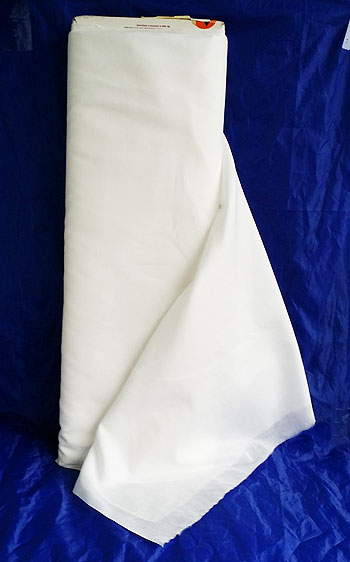
The batiste in the picture is for sale in five yard lots on my website. It is plain, very slightly off-white (sometimes called ‘old white’) in a light weight, that I use for doll underwear and some baby doll and antique doll dresses. Click  the links to see samples of my batiste dresses.

Leave questions or comments below. You will NOT be spammed or get a bunch of emails!


How I Made this Antique Style Dress from a Basic Pattern

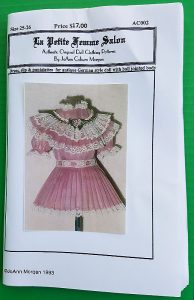
This dress was made using one of my basic patterns offered for sale here on my website. (The pattern does not include instructions on making the hat, or on making the gathered lace referenced in this article, but it does include the pattern pieces for the slip and drawers – antique style panties along with all of the complete dress pattern pieces).

To go from the dress pictured on the pattern to the pink silk dress shown here, first I added length to the skirt pattern so I could give it a 2 inch hem it instead of adding lace.

I narrowed the sleeves so they were more tailored instead of full. I tailored the bodice and added strips of lace-trimmed fabric from the shoulders to where the bodice meets the skirt.

Final touches included adding Venice lace to the top part of the skirt and to the bottom edge of the sleeves, and creating  a rosette at the neck and a double self-fabric bow at the waist.

Leave questions or comments below. You will NOT be spammed or get a bunch of emails!
A Brief History of Fabrics for Doll Clothes.

Fabrics  for doll clothes will be discussed individually, but this in brief mentions the different ones and the time periods they were frequently used.

Before you can make museum quality clothing for old dolls, you have to first  have a good understanding of fabric and trims. If you make a dress for  a 1950s or 1940s  doll out of fabric that was not even manufactured before 1960, you will not have a “museum quality” or “heirloom quality” dress regardless of how well it is sewn. And you can ruin a dress of beautiful cotton or silk by attaching polyester lace and ribbons.

Therefore, before you can start making patterns and clothes, you will need  a good understanding of fabrics.

Before 1940, there were limited fabrics used for doll ( and even people) clothing. Cotton, wool, silk, linen.  All these fabrics came in weights and styles from heavy and coarse to light and delicate. I at one time owned  a 1980s wedding dress made of cream wool that was so fine and delicate you would never think it was wool, and likewise I have seen garments of silk that were quite heavy and not what one would think of as silk

In the late 1800s the first synthetic was made, rayon, but it was unstable and did not come into common use until it was perfected, in the early 1900s. At that time rayon was used in many forms, mostly for thing like ladies lingerie but also for fancy dresses that would have previously been made of silk, a much more expensive fabric. Because the rayon was not nearly the quality of silk, people soon would pass over garments advertised as made of rayon- so manufacturers would advertise a garment of “imitation silk” instead of rayon. You will find old catalogs describing both doll clothes and people clothes as “ imitation silk”—which means they were rayon.  The rayon of the time (like real rayon fabric today)  was ruined if it was washed—so it was dry clean only. It was often quite fragile and would tear easily. It also frayed easily so was not popular for home sewing. Many doll clothes between 1910 and 1950 were made of rayon, which is one reason so many “factory original” doll dresses were lost and discarded—they were fragile, frayed easily and a few times off and on in the hands of a little girl often  left them limp and often torn, so they were discarded. If they were washed they were thus ruined and discarded.

In successive posts I will talk about each different fabric, it’s qualities and what is most desirable  for dolls made any time before 1960. For dolls made after that, it is okay to use synthetics–or anything you wish.  most of them are dressed in synthetic fabrics or blends.

Leave questions or comments below. You will NOT be spammed or get a bunch of emails!

Fraying Seams– Pinking Shears

When sewing heirloom quality doll clothes with fine fabrics it is not uncommon to use fabric that frays easily. I am sure you have a dozen bottles of “Fray check”  (fabric glue) sitting about your sewing room. I don’t have any.  A little dab of this on person clothes, with a half inch or 5/8″ seam, won’t show. On a bodice  for an average doll it will make a “big glob of glue.” This may be acceptable for play doll clothes, but it certainly is not for heirloom quality doll clothes.
“Oh” you may ask, ” how then do I avoid fraying at the seams?”   You don’t. You control it. First, while the correct width of seams for fine doll clothing is 1/4 inch, when cutting fabric that might fray easily, instead allow for 3/8″ seams. This gives you room to cut with pinking shears and still have your 1/4″ seam. The pinking shears greatly reduce fraying and the slightly wider seams take care of the zig-zag cut. Invest in fine quality, sharp pinking shears, don’t go cheap on these. I use Ghinger Pinking  shears because they are smaller and razor sharp— and they do come in both right hand and left hand styles. 

If with your pinked edges you still feel there might be a little fraying, don’t dump glue on it– use the triple stretch stitch on your machine. This takes a fraction longer but makes an edge that doesn’t fray easily.

Never used pinking shears and don’t know what they are? Pinking shears are special scissors that cut the fabric with a zig-zag edge, for the purpose of the above, helping to prevent fraying. These are NOT THE SAME as the scalloping shears or cheap pinking-type shears you buy in the scrap booking section of the craft store. You need real professional quality (as shown) pinking shears for doing fine sewing.

Leave questions or comments below. You will NOT be spammed or get a bunch of emails!

Fabric for Heirloom Doll Dresses –Cotton Broadcloth

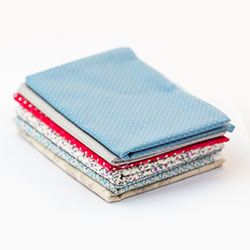
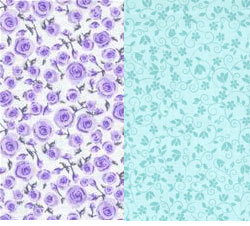
Cotton broadcloth, as such,  is uniquely American– broadcloth is a type of weave that was traditionally done in wool, but in the UK they used a cotton named poplin which, when imported to the U.S., was called broadcloth for the U.S. market. It comes in many weights and from snowy white to a myriad of prints, such as those shown in the picture. It comes in many weights from very light, light, medium, heavy and heavier.  I never use any weight other than very light or light weight for doll dresses, and prefer the “very light” weight. It also comes in different qualities, so you check the “feel” and weight when shopping for it. I  do a lot of shopping on line for both new and old fabrics, and any time I can I will spend a few dollars extra and get a sample before I order. One of my favorite places to buy new fabrics is Fabric.com — for a number of reasons: They have rulers on their fabric pictures showing scale, ( I will talk about scale and its critical importance in doll dresses in a later post) they give you a complete description of the fabric such as weight, size, content and so on, but for a small fee you can order a sample. The sample is worth every penny– you know exactly what you are getting, and you can order as little as a half  yard or order more and get a better price on most of their fabrics.

Broadcloth is one of the easiest fabrics to sew and if it is 100% cotton won’t give you trouble with fraying. You can also use a little spray starch for a little extra crispness, which is desirable for heirloom doll dresses. In the days when women would actually iron clothes, new cotton fabric came with  sizing  which gave the effect of light starch, a lovely crispness to the fabric. This would usually wash out and you would then have to starch the clothes if you wanted the same crispness.  Now no one wants to iron anything, so fabric companies instead do everything they can to make the fabric LIMP and not only that, treat the yarns so they won’t even easily take starch. (Don’t worry about ironing doll dresses— once they are on the doll they usually stay!)  Synthetic blends are almost impossible to add that touch of crispness that makes the dresses look vintage. Another reason to avoid blends, for heirloom quality dresses, if you are using any form of cotton, always use 100% cotton, never a cotton blend.

Leave questions or comments below. You will NOT be spammed or get a bunch of emails!


About Pin Cushions

Pin cushions seem like they are so basic they need not be mentioned, but they come in such a variety of sizes and shapes I thought I would mention them. After nearly three quarters of a century of sewing, I found the best, most efficient and least expensive to be the large “tomato” pin cushion. By large I mean the biggest– about 5″ across and 4.5″ tall. This pin cushion not only handles a bunch of pins, it is heavy enough so when you pull one out the pin cushion doesn’t lift with the pin. It should also have the small bag of emery with it to hold any needles you may be using and keep them sharp.

I have one of these by each sewing machine, on the cutting table, and near the ironing board, with pins so if I need to pin something I don’t have to find where they are, they are withing easy reach!

Leave questions or comments below. You will NOT be spammed or get a bunch of emails!

Straight Pins

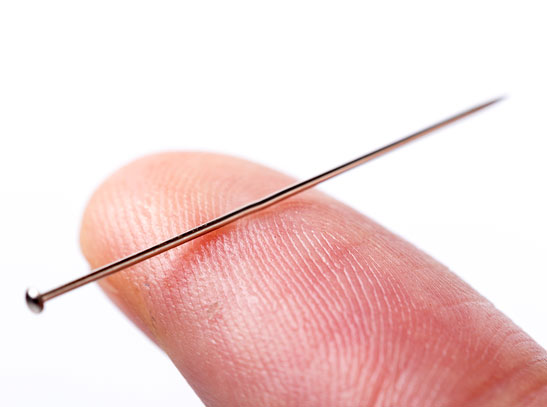
Straight pins are an essential tool– even if you like to baste seams first to make sure they are right before sewing them– you need to pin the pieces neatly together before sewing. This makes it easy to see just where your seam needs to be. Anyone reading this has probably used straight pins for this, but there are straight pins of many different types and they do have different purposes. For sewing doll clothes, those cute pins with the color balls at the top are often the most appealing. And they are the most useless for sewing doll clothes. Whether going straight to the machine to sew the seams ( which is most common and what I do except in unusual cases) or basting first, you will find those cute colored head get in the way and you have to pull them out as you sew. If you use long and thin silk pins, which have a tiny head and are very sharp, you can just leave them in place and sew right over them, removing them when you are done. Since doll clothes are often made of fine fabrics like organdy, silk, batiste, taffeta and so on– silk pins are also the best for not damaging the fabrics.  Buy a package and try them– you will love them! It is the only kind I use.

Leave questions or comments below. You will NOT be spammed or get a bunch of emails!


Bulky Under Arm Seams

Bulky Under Arm Seams

Recently one of my website fans wrote me the following :

“When working with small doll clothes, it is difficult to get the sleeve under the arm pit to lay right. It often bunches up under the arm. It would be great to see tips on your site about that.”

I think this is a fairly common problem, so I did a picture article. 

I made a prototype of a bodice with a set in sleeve so I could show you how to reduce the bulk and make it hang nicely. When people who have learned to sew on person clothes start to make doll clothes, there are many things they don’t think about or address (which is why I started doing doll clothes sewing seminars—it is totally different than people clothes) and one of those things is, dolls don’t move. When sewing clothes for people we are taught to make nice wide seams so they won’t pull out when people move around, and because even children’s clothes are much , much larger than doll clothes, that  5/8” seam just doesn’t add enough bulk to worry about. When the whole bodice is only four inches across the chest, a 5/8” seam adds a lot—too much—bulk. It also stiffens the garment so it wants to not fit gracefully. So here are the pictures I did for you and the explanation : ( Click on pictures for larger view)

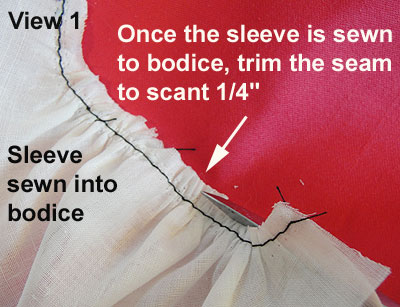
Here is a bodice with the sleeve set in, showing the sleeve seam. As shown, once the sleeve is sewn to bodice, trim the seam to a scant ¼”.

How to make doll dresses - Sleeve seam

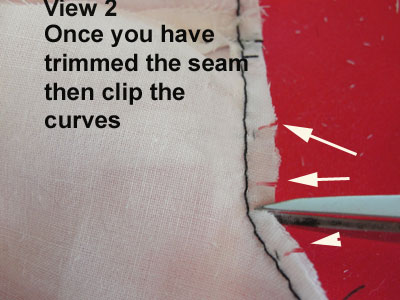
Then, as shown in view 2, clip all the curves.

How to make doll clothes - seem 2

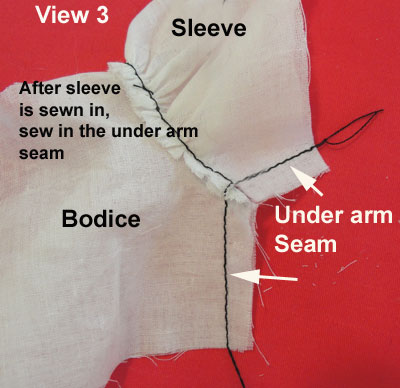
When this is done, sew up the under arm seam as in view 3.

How to make doll clothes tutorial - Under Arm Seam

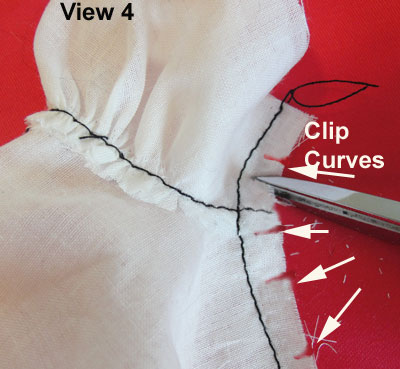
Carefully clip all the curves as shown in view 4.

How to make doll clothes - under arm seem tutorial view 4

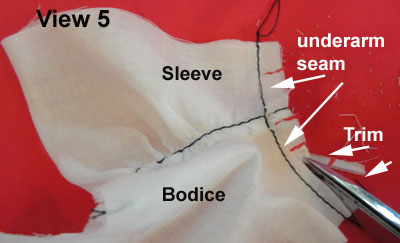
When that is done, trim the seam to a scant ¼”  as in view 5.

How to make doll clothing tutorial - Under arm seam

This will reduce the extra bulk and make your underarm seam give nicely.

I hope this is helpful to everyone!  JoAnn


Lining Doll Clothes

I see many clothes for sale on eBay and on websites that don’t look quite right. Long ballgowns that proudly say, “Fully lined!” Then you look at the full skirt, and instead of falling and flowing gracefully, it puckers up around the bottom and looks stiff. It is because in a doll dress, even for a large doll, there is not enough weight in the fabric to make it fall gracefully once you bulk it up with a lining. In a person dress this would not be a problem, because there would be a couple of yards of fabric to hang down. On a doll dress, there is only 10″ or so!

Pride in “Fully lining” clothes is a leftover from many years ago, when fabrics were NOT colorfast, and on a person, body perspiration could ruin clothing, so high quality garments for PEOPLE were often “fully lined”, an important thing.

The other reason for “fully lining” is to allow a nice finish on a fine fabric, at the neck and perhaps the sleeves, and for the garment closure. If I make a silk dress with a scooped neck for a Cissy doll, the only really classy way to finish it is to line the BODICE. If the sleeves are sheer, I may also line them, for a fine finish at the bottom. Instead of lining the skirt, though, I will instead put on an attached under skirt that acts as a lining, but does not only not bind up the bottom edge, it also lends a graceful flow to the skirt if it is full. On a fitted sheath or sheath skirt, I would line the skirt–but not sew the lining to the bottom of the skirt.

When I do line doll clothes, I use the lightest weight lining material that is appropriate–often swiss organdy or silk, sometimes very lightweight taffeta. Anything but the very lightest weight fabric will simply add bulk and make the doll dress look “bunchy”–on a person it would look like you were wearing a blouse under a blouse.

If you have every looked at antique French Fashion dolls, and many reproductions of them, you will see that when nude they have slender lady figures. Then when they are fully dressed, they look like they are fat or pregnant. This is because the tradition is to dress them in clothes made exactly like people clothes, including fabrics,linings, and underclothes.  The fashion does not look beautiful and graceful as it would on a human. It looks bulky and awkward. Why would you want three layers of underclothes on a doll? It certainly adds no charm. The outer garment can be made to look on the doll just as it looks in pictures of the beautiful fashion women of the era of the clothes— simply eliminate the bulk of layers of underwear, and heavy fabrics and lining. Substitute the same fabrics ( such as wool ,cotton, silk) in appropriate DOLL WEIGHTS. Underclothes? Are people going to life up the doll’s dress to be sure she is modest? Or will they enjoy the illusion of the beautiful fashions of the era.

Before you decide to line a doll dress, especially the skirt part–ask yourself, is this the best way to finish this? Am I choosing the lightest weight, least bulky materials? Will the dress fit smooth and flowing, if I line it?

I hope you will find this tip helpful. I have been making doll clothes for more than 70 years, so this is the voice of experience speaking.

  • « Previous Page
  • 1
  • 2

In loving memory: JoAnn Morgan

Gone but not forgotten

We have disabled the shopping feature of this site until I can get Mom’s book “Through the Eyes of Gretchen” Published.

I am sorry for any inconvenience.

Harmony (daughter and webmaster)

Blog Menu

  • How to Sew Doll Dresses
  • Tools of the Trade
  • Seminars
  • Recommended Resources
  • Make this Doll Dress
  • Fabrics, Trims & Embellishments

You Can Repair and Restore Dolls As A Career!

[gallery link="file" columns="2" ids="21,23,20,22"]

Doll Repair & Restoration Seminars

Now offering  more than one kind of seminar - Call Rubie at 1-214-403-7077 to decide which seminar is best for your goals. Full seminar, antique dolls to modern, including china and bisque dolls, includes cloth, papier Mache, and other … Get Details!

Doll Repair & Restoration Seminars

Doll Repair and Restoration Seminars — not a hobby, a lifetime career!

Now offering  more than one kind of seminar - Call Rubie at 1-214-403-7077 to decide which seminar is best for your goals. Full seminar, antique dolls to modern, including china and bisque dolls, includes cloth, papier Mache, and other

Get The Details

Doll Repair – Stringing

Merry Christmas

About the Lace I Am Putting On….

Because of illness, I am liquidating  a 70 year accumulation of fabrics, trims and goodies in my sewing room. I am unable to sell by the yard as there is simply too much of it!  So all items will be … [Read More...]

Queen Anne Dolls

Since I am not actually in the doll business but am offering these for sale,  I feel I need to share the whole story with my customers. Many years ago I bought a collection of old dolls, and in the collection was a carved wooden Queen Anne doll from … More...

Frequently Asked Questions

Joann…I feel stupid but I can not tell the grain on material… You said it really matters that it is cut right.. If you get a chance explain to me how to tell.. I appreciate your time.. Looking forward to trying the patterns you just sent me but afraid

Hi Mary, sorry it is confusing for you.  Here is a picture of a bolt of fabric telling how to tell … [Read More...]

I have an antique doll by Lena Schwartz. How do I sell it?

I am sorry, I have been out of the doll business for almost 20 years and all the dealers I knew have … [Read More...]

What Makes a Doll Antique or Vintage

Before eBay set their own ideas for what is antique or vintage, a doll to be considered vintage had … [Read More...]

More Posts from this Category

Privacy Notice · Terms of Use · Contact Us · Copyright © 2026 · Base Website · Custom Web Design by Coburn Enterprises · Log in